
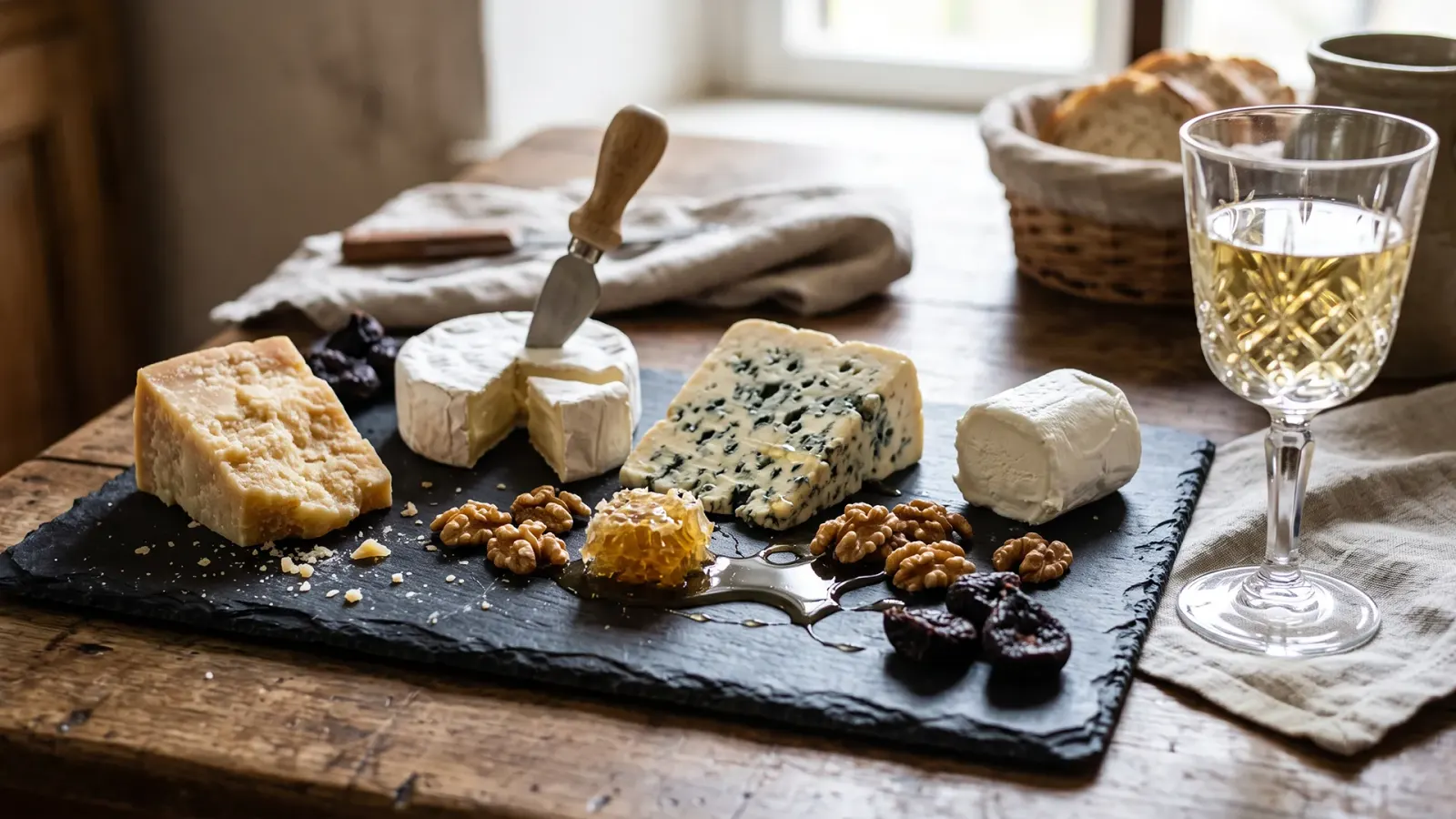
Pairing cheese with wine looks like a science until it turns out that almost every chart comes down to three ideas. They are enough to get every pair on the table right.
First: white more often than red
The habit of pouring red with cheese costs more than it seems. The tannins in red argue with salt and fat: the older the cheese, the more it dries the mouth alongside a dense cabernet. A white with acidity — riesling, sauvignon blanc, chablis — works with almost everything, from fresh mozzarella to mature comté.
Second: matching weight
Light with light, dense with dense. Fresh goat cheese disappears next to barolo; a thirty-month parmesan leaves nothing of a pinot grigio. Go by weight in the mouth, not by colour.
Third: neighbours
Cheese and wine from the same place fall together on their own — they have been eaten together for centuries. Sancerre with a Mosel riesling, pecorino with montepulciano, comté with a wine from the Jura. The rule is crude, but it saves you when there is no time to taste.
What to do with blue
The one cheese that needs something sweet. Salt and mould ask for a counterweight: roquefort with sauternes, gorgonzola with port, stilton with aged sherry — pairings nobody argues about. A dry wine turns sour beside a blue cheese.
The order on the board
From soft to aged, from fresh to blue, clockwise. Take the cheese out an hour before the table: cold, it gives you salt and nothing else. Cut it just before serving, not in advance — a cut surface dries in twenty minutes.