
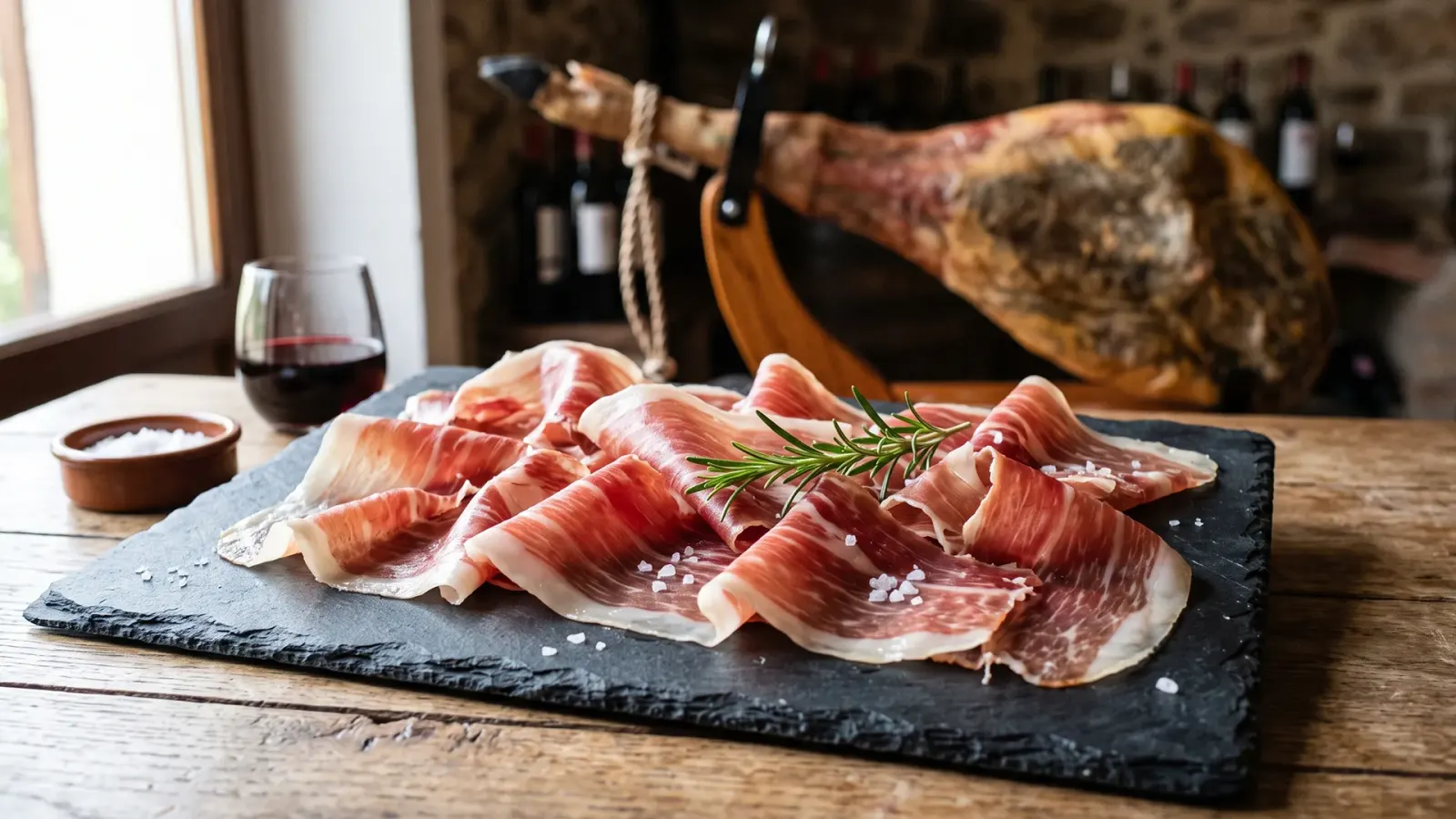
Two words on the label decide almost everything, and they are the two most often confused. Serrano is made from white breeds — the same ones that give ordinary pork. Ibérico comes from the black Iberian pig, a breed that lives in south-western Spain and Portugal and puts on fat differently: it runs through the muscle in fine veins instead of sitting on top in a layer.
Hence the taste. Serrano is direct and salty; ibérico is nutty, with a long finish, and its fat melts at room temperature. That is not a figure of speech: lay a slice on your palm and half a minute later it turns translucent.
What «bellota» means
Iberian pigs are graded by their last months of feeding. Bellota are the ones that spent those months roaming oak groves and eating acorns; this is the top grade and the most noticeable difference in flavour. Cebo de campo means pasture plus grain. Cebo means grain and a pen. The word «bellota» on a label is worth more than any extra number of months.
How long it is cured
Serrano is cured for one to one and a half years, ibérico for two to four. Longer is not better: an over-dried ham loses the very fat that melts, which is what it is bought for. A good benchmark is three years for bellota and eighteen months for serrano.
How to carve and how to serve
Thinly and by hand only, with a long flexible knife: the slice should be translucent. A machine warms the meat and tears the fibre. Take the ham out of the fridge half an hour before the table — cold, it says nothing.
It goes with aged cheeses, olives, and bread with tomato and olive oil. To drink — fino sherry, a dry white, or a light red without heavy tannins; spirits will drown the nutty note the whole thing was about.