
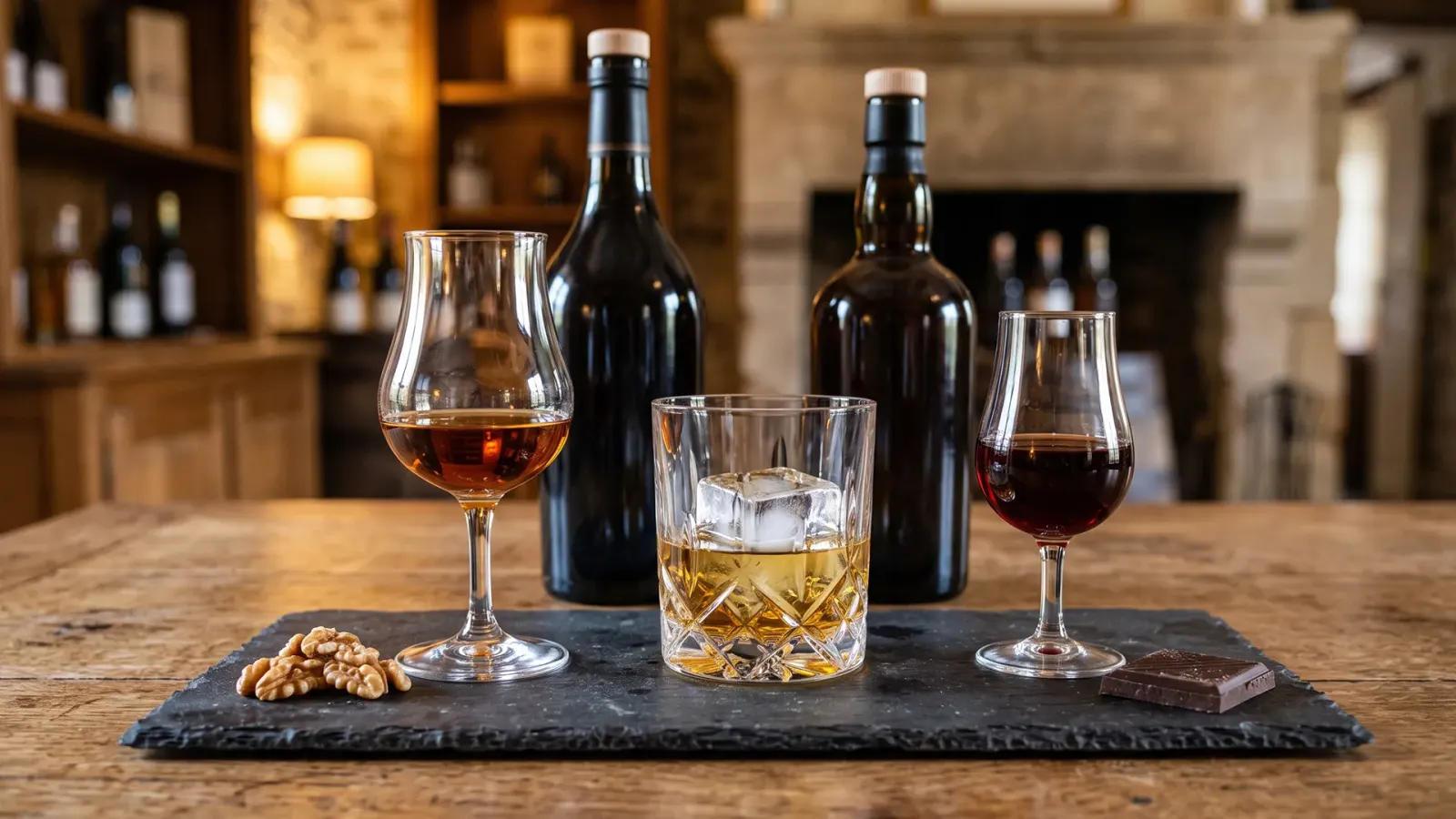
A digestif is not an obligatory ritual but a way of ending dinner so that everyone stays at the table another hour. The choice is small, and the differences are clearer than the labels suggest.
Cognac: the letters on the bottle
VS means at least two years, VSOP at least four, XO at least ten. That is the minimum age of the youngest spirit in the blend, not of everything in the bottle, so the gap between the VSOP of two houses can be wider than between the VSOP and the XO of one. A young cognac is brighter and more fruity, an old one softer and drier, with notes of dried apricot and leather.
Whisky: single malt and blended
A single malt is made at one distillery from malted barley — it carries the character of a place: the peat of Islay, the honey of Speyside, the salt of the coast. A blend is assembled from several and is more even; it is not worse, it is about predictability. After a heavy dinner the blend suits better; for conversation without food, the malt.
Port and sherry: sweet and dry
Port is a fortified wine from the Douro valley. Ruby is younger and more berried, tawny is cask-aged and gives nut and caramel; that is the one to take with chocolate or blue cheese. Sherry is broader than people think: fino and manzanilla are dry and faintly salty, drunk chilled before the meal, while pedro ximénez is thick and sweet and ends it.
Temperature and glassware
Cognac and whisky at room temperature, 18–20 degrees; warming a cognac in your palms over a candle is unnecessary, a habit from the days of bad cognac. A tulip glass gathers the aroma better than a wide snifter. Port is served slightly cool, around 16; fino cold, at 8–10.
Ice kills the aroma of spirits; if you want it cold, take one large cube — it melts slower and dilutes less. A drop of water in a single malt does the opposite and opens it up: taste before and after.